
Digging the best hole (in the wrong garden)
How even a basic data strategy can make all the difference

My favorite question: why do we need a data strategy? Why can’t we just let data scientists and engineers design, build, and deliver products? I’ll admit - this can work - but even in those rare cases, the scientists and engineers are probably doing data strategy undercover without knowing it.
I love to illustrate this story with a metaphor. Imagine someone told you there is a treasure buried deep underneath the meadow just outside your village. Excited, you go to the local tavern and recruit the most capable team you can find, and with their equipment, you set off to the location:

You start digging. Hours and hours pass - despite the valiant and steady efforts of you and your competent companions, there’s nothing to be found. And then, as you sit down on the edge of the dig site, it dawns on you. It is not a question of effort or skill: you forgot to ask in which meadow the treasure was buried. By the time you share this with your companions, they are too tired to continue and decide not to trust you anymore.
One simple question, in the beginning, could have saved hours of work.
Some of the best and most exquisite technical work I have seen has been precisely on such projects - which were doomed at the start. Impressive data architectures and pipelines were designed and built - but by the time they were done, nobody was there to use them because the use case was not in line with the business goals.
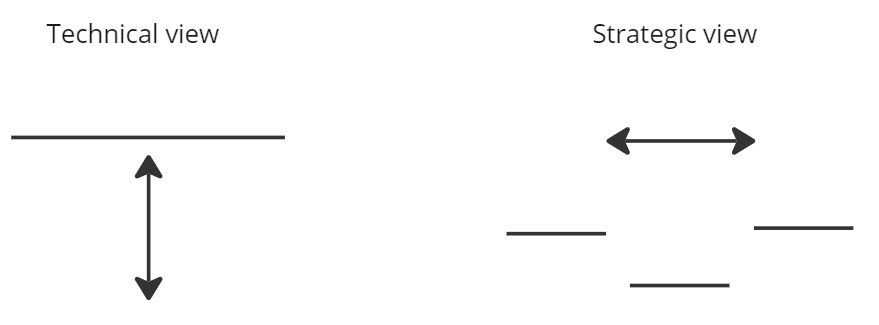
There is so much more to data strategy than just deciding which use cases to pursue - and, more importantly, why - but even a basic, bare-bones strategy can help avoid the most frustrating of failures.
So next time when you go digging, remember from time to time to peer above the ground and ask yourself - are you digging in the right meadow?