
The difference between an intended strategy and a realized one
The world is changing fast, and static strategies won't work anymore

You don’t need to follow modern geopolitics to see how our world becomes increasingly complex. Even as an individual contributor in data, you would be struggling with the multitude of tools and frameworks arriving on the scene. In many ways, the data field is unrecognizable compared to ten years ago.
With the changing landscape, we must naturally change the way we work. The old way to do data strategy was to have a static, multi-year execution plan. Now, it would not work and quickly become out of sync with what really matters for the organization (especially for a big, less nimble one). I have been a proponent of StratOps for a very long time, and slowly, we are starting to see it becoming more established.
On the weekend, I was going through a very interesting book, Embracing Complexity: Strategic Perspectives for an Age of Turbulence, and came across this visualization. It encapsulates what we need to do very well:
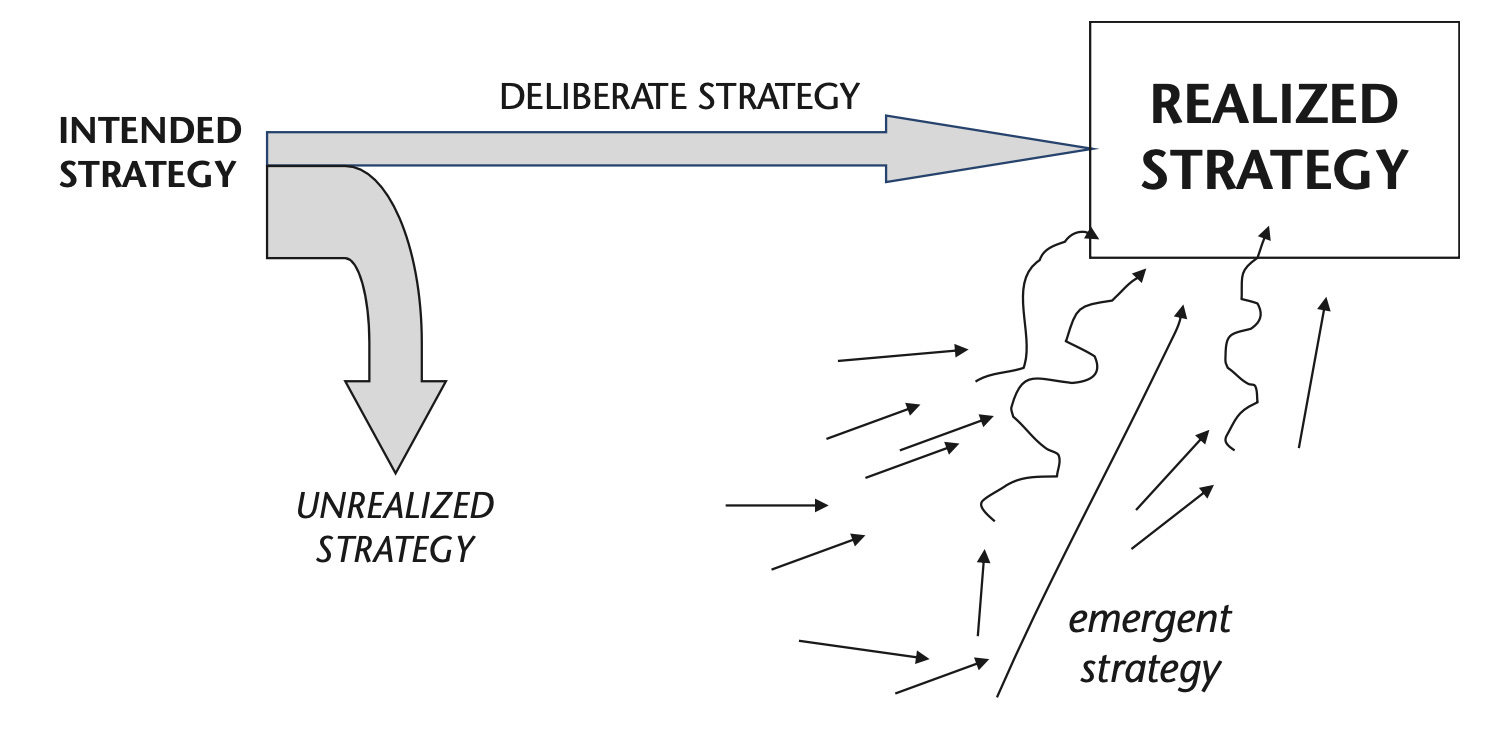
The realized strategy is often going to be the one that is more organically generated, customized to the unique situation of the organization, and attempts to steer it in a positive direction rather than becoming an unused PowerPoint deck at best and a constraining dogma at worst.